

Regrouting
Regrouting Across Perth
Tired, cracked and stained grout removed and replaced, restoring the appearance of your tiled surfaces and reinstating sound, sealed joints.
Grout is a consumable. It looks permanent, but it erodes, cracks, absorbs staining and eventually breaks down, particularly in a shower, where it takes daily wetting, heat and cleaning chemicals.
Regrouting removes what has deteriorated and replaces it with fresh material. It is one of the most cost-effective things you can do to a tired wet area: it changes how the space looks, and it reinstates the joint detail that keeps water where it belongs.
Free silicone replacementIncluded
Every shower repair includes removal and replacement of perished silicone at the wall, floor and corner junctions at no additional charge, where the assessment finds it is needed. It is not quoted as a separate item and it is not added to the price. Sound silicone is left alone rather than replaced for the sake of it.
What to look for
Signs You May Have a Grout Problem Problem
Any one of these on its own is worth a look. Two or three together usually means it is time to act.
Grout that has gone dark or patchy
Staining that no longer responds to cleaning usually means the grout surface has broken down and is holding contamination.
Crumbling or powdery joints
Grout that comes away when you run a fingernail along it has lost its integrity and needs replacing rather than cleaning.
Persistent black mould in the joints
Mould that returns within days of cleaning is generally growing within the grout, not on it.
Cracks along the joint lines
Hairline or open cracks running along grout lines, often at corners and where the wall meets the floor.
Missing sections of grout
Gaps where grout has fallen out entirely leave the tile edges and substrate exposed.
Silicone that has lifted or hardened
Sealant peeling away from the tile, or gone brittle and cracked, no longer accommodates movement.
Areas we regrout
- Shower regrouting: walls, base and the junctions between them
- Bathroom floor regrouting: including around wastes and at the room perimeter
- Bathroom wall regrouting: full-height or to the affected area
- Balcony regrouting: field joints, perimeter and movement joints
- Commercial wet-area regrouting: amenities blocks, accommodation, hospitality and retail
- Laundries, powder rooms and other tiled wet areas
The regrouting process
Every job follows the same sequence. The amount of time each stage takes depends on the size of the area, the tile type and the condition of the existing grout.
Inspect the existing grout
We assess how far the deterioration extends, what type of grout is in place, and whether the tiles themselves are sound. This is also when we identify anything that changes the scope.
Remove deteriorated grout where required
Failed grout is cut out to an appropriate depth. Sound grout is generally left in place, because removing grout that is doing its job adds cost and risk without benefit.
Prepare the joints
Joints are cleaned out of dust and debris so the new grout can bond properly. Mould-affected areas are treated at this stage.
Install replacement grout
New grout is worked into the joints, tooled to a consistent profile and cleaned back off the tile face before it cures.
Replace applicable silicone and sealant
Internal corners and wall-to-floor junctions take flexible sealant rather than grout, because they move. Old sealant is removed entirely rather than sealed over.
Clean and finish
The area is cleaned down, haze removed and the work checked over before we leave the site.
Provide care instructions
You get clear written guidance on curing times, when the area can be used again, and how to clean it without breaking down the new grout.
What regrouting will and will not do
Regrouting reinstates the joints between tiles. It restores appearance, removes mould-affected and crumbling material, and re-establishes a sound, sealed surface detail.
It is not a waterproofing system. Grout is not waterproof in its own right, and regrouting a shower will not repair a failed waterproofing membrane, a plumbing fault or a structural defect beneath the tiles.
Where deteriorated grout genuinely is the path water is taking, regrouting can resolve the problem. Where it is not, regrouting alone will not, which is why we assess before quoting rather than after.
Colour matching
We can usually get close to an existing grout colour, and in a full regrout of an area the match matters less because the whole area is done at once.
Exact matching to aged grout is not something anyone can promise, because existing grout has years of staining and wear that new material does not. Where colour matters, we will talk through the options with you before starting.
Categories
Areas We Regrout
Shower regrouting
The highest-wear wet area in the house. Walls, base and the junctions between them, plus full silicone replacement.
Bathroom floor regrouting
Floor joints, waste surrounds and the perimeter where the floor meets the wall or skirting.
Bathroom wall regrouting
Full-height or partial wall regrouting, including behind vanities, baths and around tapware.
Balcony regrouting
Exterior-grade grout and flexible joints suited to a surface that moves with temperature and weather.
Commercial wet-area regrouting
Amenities, accommodation, hospitality and retail wet areas, scheduled around your operating hours.
Recent work
Regrouting We Have Carried Out
Photographs of our own completed work. Every job is different, so treat these as an indication of finish rather than a like-for-like match with your property.
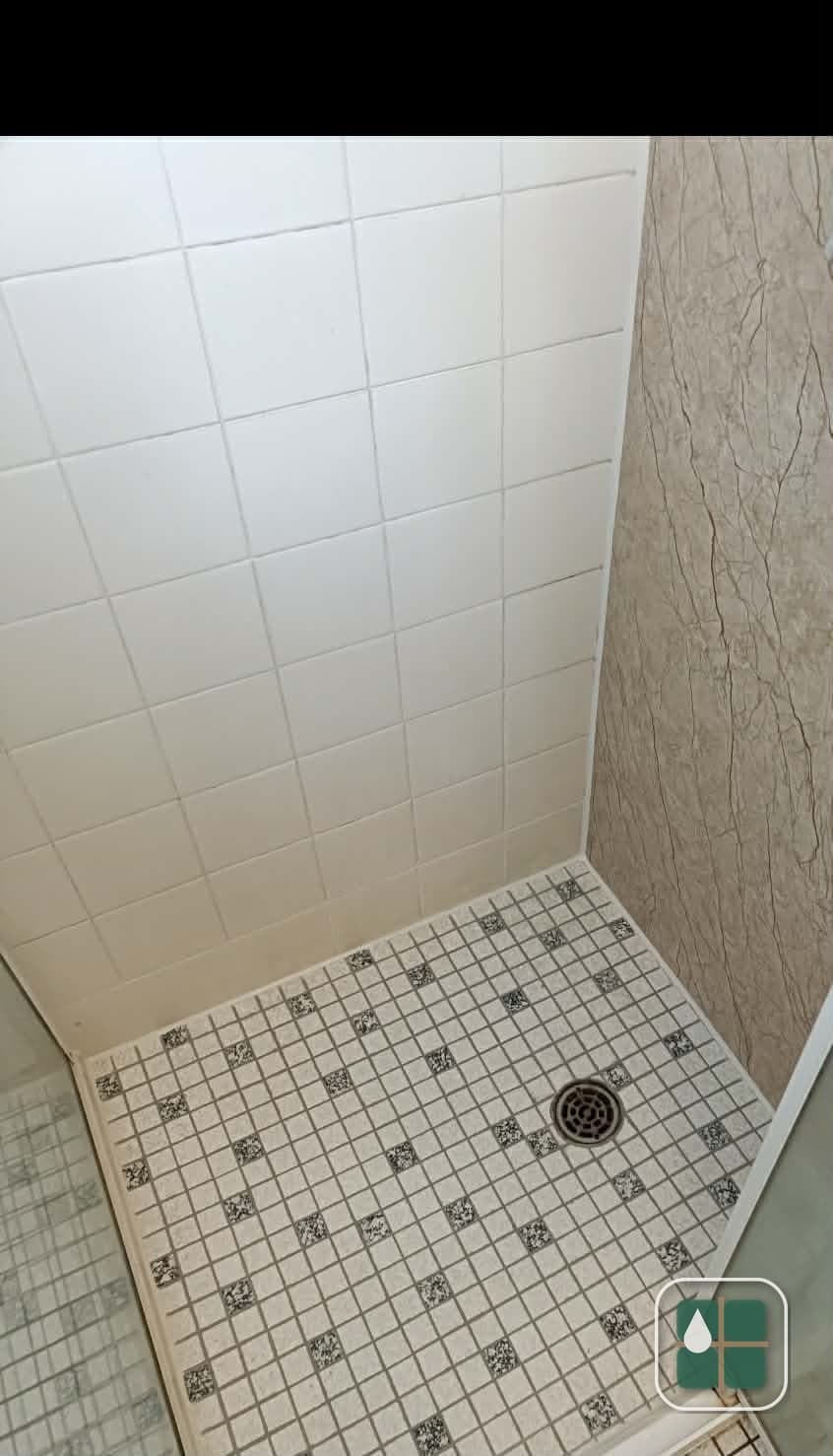
Shower recess after regrouting, with square wall tiles and mosaic floor brought back to an even, consistent finish. 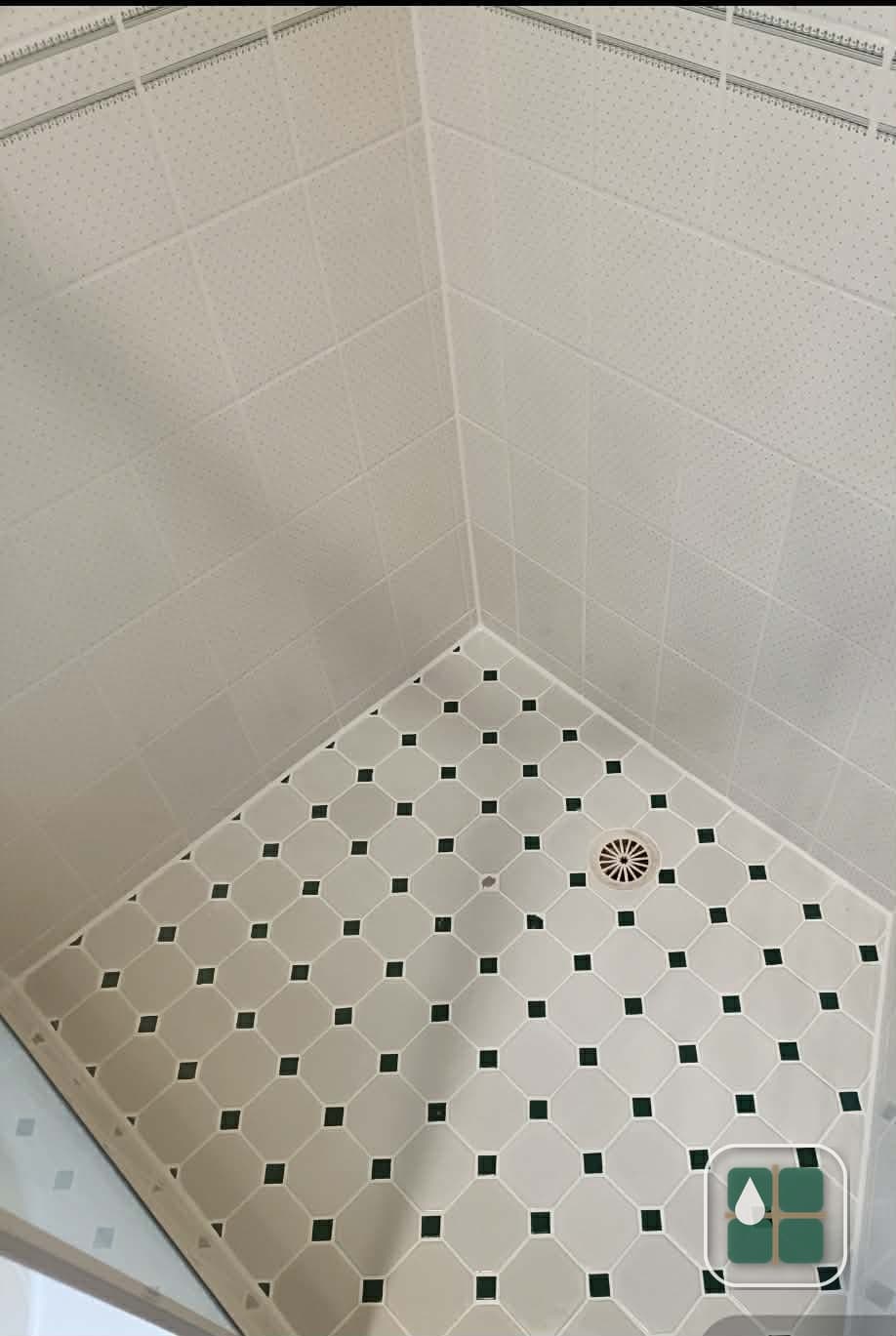
Original octagonal mosaic shower floor regrouted, with crisp white joints right up to the waste and the wall junction. 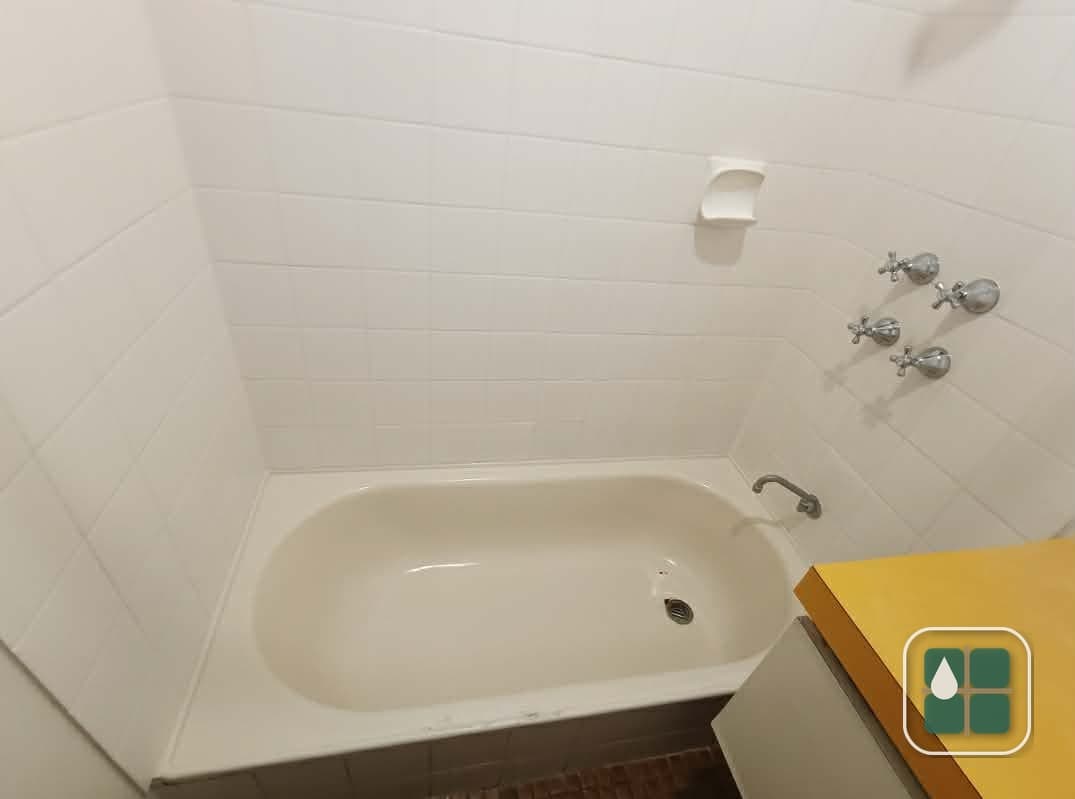
White-tiled bath surround with the grout lines cleaned up and the tile-to-bath junction resealed. 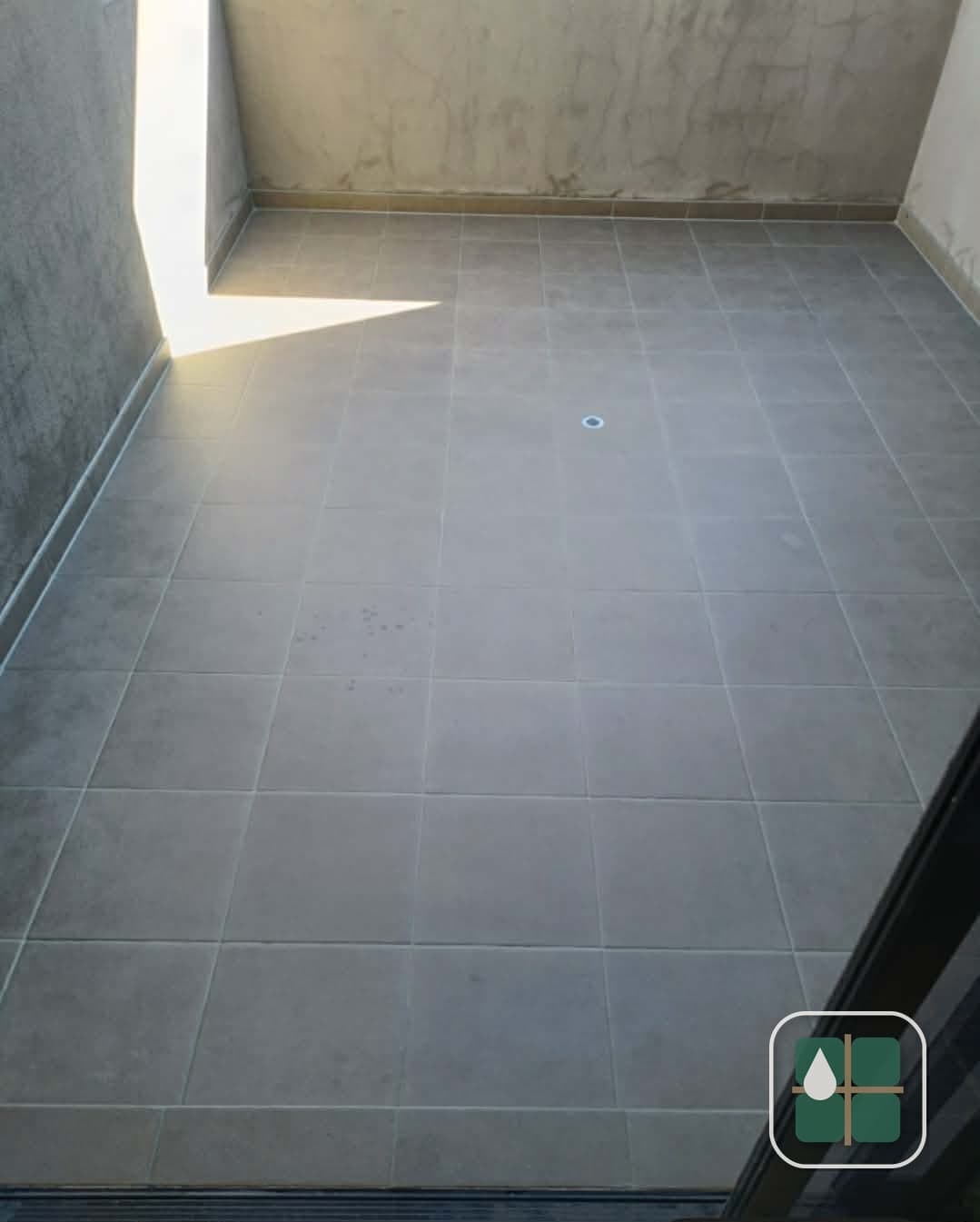
Grey-tiled balcony after regrouting, with consistent joint width across the floor and along the wall perimeter.
Get an Estimate
Answer a few questions about your regrouting and see an indicative range immediately. No contact details required to see the result.
Does regrouting stop water leaks?
It can, when deteriorated grout is genuinely the path the water is taking. Reinstating sound joints and replacing failed sealant removes that path.
Regrouting is not a waterproofing system, though. It will not repair a failed membrane beneath the tiles, a leaking pipe or a structural defect. Anyone who tells you a regrout fixes every leak is overselling it.
Do you remove existing grout?
Yes. Deteriorated grout is cut out to an appropriate depth rather than having new grout smeared over the top of it. Grout applied over failed grout does not bond properly and will not last.
Sound grout is generally left in place. Removing grout that is still doing its job adds cost and creates unnecessary risk of chipping tile edges.
Do you replace silicone?
Yes. Internal corners, wall-to-floor junctions and other joints that move take flexible sealant rather than rigid grout. Old sealant is removed completely, the joint is cleaned and prepared, and new sealant is applied and tooled.
Sealant is never applied over the top of existing silicone, because it will not adhere reliably and it traps whatever is growing underneath.
Can you match my existing grout colour?
We can usually get close. Where a whole area is being regrouted at once the match matters less, because the entire surface is consistent when we finish.
An exact match to aged grout is not something we would promise. Existing grout carries years of staining and wear that new material does not have. If colour is important to you, we will discuss the options before starting.
How long before I can use the shower again?
As a general guide, allow at least 24 hours after grouting and silicone application before the area is wet again. Silicone in particular needs time to cure properly, and using the shower too early is the most common cause of a premature failure.
The exact time depends on the products used, the temperature and the humidity on the day. We give you specific written curing times for your job before we leave.
Related services
Bathroom Leak Repair
Targeted repair of leaking showers, bathroom floors and wet-area joints, often without removing existing tiles.
View serviceBalcony Leak Repair
Surface remediation for leaking tiled balconies, covering joints, perimeter seals and grout, with honest advice when the problem sits deeper.
View service
Next step
Need Regrouting in Perth?
Send us photos and a short description. We will tell you what we think is happening and what the next step should be.